Practical Uses for Google Forms in the Classroom
Robert Abraham
Instructional Strategist
News

Google Forms is a powerful tool to use in the classroom. It allows educators to collect data using surveys, assessments, and quizzes — but it can do a lot more. There are many other practical uses for it in the classroom and the following are just some examples. (Look out for some cool Forms add-ons, too!)
- Opinion Surveys – Teachers can use Google Forms in the beginning of the year to get to know their students better. Creating a simple form to learn about students’ preferences can go a long way in customizing future lessons for them.
- Parent Surveys – This is another useful tool for gathering important information both about the student and obtaining contact information for the guardians.
- Lesson Plans – Create detailed lesson plans on Google Forms with activity descriptions, objectives, and standards.
- *Use an add-on called Autocrat to turn the responses from the Form into a document. Autocrat is a tool similar to mail merge that will take responses and merge them into a neat PDF file.)
- Sign Up Sheets – Whether used for students to bring something into class or choose an assignment topic, forms can be a great tool.
- *Use an add-on called Choice Eliminator to have Forms remove an option after it has been chosen.
- Sign Out Sheets – You can use Forms in place of physical sign out sheets for those Chromebooks or iPads.
- Exit Ticket – Students can use Google Forms to answer exit questions at the end of the class as well as an ice breaker activity at the beginning of a lesson. Videos, links, and images can be added as well.
- Flipped Classroom Follow-Up – Most flipped classroom activities involve students watching a video at home and answering some questions. You can add a video to Google Forms and ask questions directly – and assign this in Google Classroom.
- Reading or Computer Logs – Use Google Forms to allow students to track progress digitally whether in the classroom or at home.
- Introduce Google Forms and Digital Questions to Young and/or ELL Students – Use Google Forms with younger students or non-English-speaking students by inserting pictures for the answers in a multiple choice question. (The teacher can read the question to non-readers in English or in their native language.)
- Writers Conference Meeting Schedule – If your students need to schedule a time to meet with you to discuss their writing, Google Forms can help. Create a form in Google Forms and it will gather the data you’ll need (name, class, time, etc.) in a Google Sheet.
- *Use and add-on called Form Limiter to stop accepting responses when specific Google Sheet spots are filled. No double-booking!
If you are not comfortable using Google Forms, many of the above options can also be done in Smart Notebook using various tools and Smart Lab Activities such as Shout it Out.
To learn more about using technology to supplement your classroom, and practical uses for Google Forms in the classroom, check out our online professional development platform OTIS for educators and visit the Teq Talk blog.
0 thoughts on “Practical Uses for Google Forms in the Classroom”
Related Articles & Other Recommended Reading
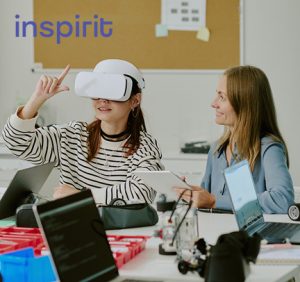
Bridging the Gap to Successful Project-Based Learning with Inspirit
There is no better way to complement your Project-Based Learning (PBL) initiatives than by creating engaging and interactive experiences in virtual reality (VR). VR provides users with a computer-generated simulation of a 3D image or environment that can be interacted with in a seemingly real and physical way. Inspirit offers user-friendly, innovative VR headsets that […]
Teq is Headed to FETC!
Teq is off to the 2026 Future of Education Technology Conference (FETC)! Being held from January 11th to January 14th, 2026, this top-notch event is being hosted at the Orange County Convention Center in Orlando, FL! Demo innovative products, grab some swag, or say hello to the team at booth #2730. Tune in to interactive […]

Introducing the New AI Literacy and Instruction Micro-credential!
The landscape of K-12 education is rapidly evolving, driven by the emergence of Artificial Intelligence. Educators and administrators need more than just introductory knowledge; they need a structured, practical path to mastery. We are excited to announce the launch of the AI Literacy and Instruction Micro-credential Playlist! This comprehensive, seven-session video series is designed specifically […]