Parent and Guardian Communication During Remote Learning
Adam Herman
PD Specialist
News

Before anything else, parents, please step out of the room. I’ll wait… yes, you too. Okay, it’s just us now. Remote teaching has presented several new challenges and realities for educators. One consistent issue has been managing communication with the parents and guardians of students. Friends of mine who are still working in schools have talked to me about receiving emails at all hours of the day and finding themselves educating the parents as much as the students on how to access and utilize various resources. To be clear, this situation is not the fault of parents and guardians. Conflict occurs whenever there is a new dynamic or set of responsibilities between people. And, the bigger the disruption, the greater the potential for conflict. The transition to remote learning has necessitated a fundamental shift in the relationship between educators and guardians, and unfortunately, it’s an environment that can be full of miscommunication and frustration.
Below are some tools and strategies to apply this new environment to help better manage guardian communication and provide the resources they need to support their child’s learning.
Create a communication schedule and stick to it
The move to remote learning has put everyone on different schedules, and many students still need help completing their work. Therefore, guardians may be unable to address student questions until later in the day. If teachers are slow to respond, parents may interpret that as rude or unprofessional. For this reason, I strongly recommend communicating to parents that there will be specific times that questions will be received and answered. For example, set a schedule for answering questions from 1:00 PM-4:00 PM and 8:00 PM-8:30 PM. Once this is done, it is paramount that you are consistent in this practice. You have been an educator long enough to know when a policy needs to be bent, but otherwise be firm in maintaining your boundaries.
If you are managing communication through email, consider an away message during off hours to communicate that you will be back during one of your selected timeframes. Instructions on how to create an away message in Outlook and Gmail are linked here. Discussing how to communicate with parents leads to my next bit of advice.
Have one platform where communication happens
Educators have an abundant amount of resources for facilitating communication with students and guardians. That also means that guardians could be using three different ways to communicate with teachers, either overwhelming them, or causing important questions or information to get lost in the shuffle. Therefore, it would be beneficial to pick one place that communication should happen and convey that to parents. The platform a teacher chooses is dependent on the context in which they teach, and what they and parents are most comfortable with.
Many elementary teachers already use ClassDojo to communicate, while upper grade teachers may stick to email. Many teachers are also creating Google Voice numbers to be able to text and call with parents without providing their personal phone number. Whichever you choose, be consistent in using it. If a guardian asks a question elsewhere, answer the question and gently request that they use the designated platform going forward. So far I have provided ways of managing communication, but the last piece of advice is how to reduce the amount of parent outreach.
Create an FAQ (Frequently Asked Questions) resource
Many organizations use FAQ pages to address the most common needs of users. From what I have observed, many parent issues are related to technical difficulties with remote teaching more than curricular issues. A way to manage this is to figure out which questions seem to be the most common, and compile them all into a findable document with answers and resources to address them.
If you or a co-worker are uploading instructional videos on how to do things like access Microsoft Teams, you could also include links to those videos. I would recommend having this document be a Google Doc or Office365 Word document so that it can be updated as needed. This strategy should hopefully reduce the amount of questions you receive about the same issues.
Final thoughts
Everyone is in uncharted waters right now, and it is easy to get frustrated. However, teachers and guardians have always worked best as partners in fostering the learning of a child, and that is more true than ever. I hope these suggestions and tools make these strange times a bit more manageable. Until this is through, you can always watch these fantastic parent appreciation videos to stay sane.
0 thoughts on “Parent and Guardian Communication During Remote Learning”
Related Articles & Other Recommended Reading
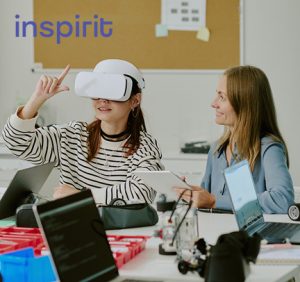
Bridging the Gap to Successful Project-Based Learning with Inspirit
There is no better way to complement your Project-Based Learning (PBL) initiatives than by creating engaging and interactive experiences in virtual reality (VR). VR provides users with a computer-generated simulation of a 3D image or environment that can be interacted with in a seemingly real and physical way. Inspirit offers user-friendly, innovative VR headsets that […]
Teq is Headed to FETC!
Teq is off to the 2026 Future of Education Technology Conference (FETC)! Being held from January 11th to January 14th, 2026, this top-notch event is being hosted at the Orange County Convention Center in Orlando, FL! Demo innovative products, grab some swag, or say hello to the team at booth #2730. Tune in to interactive […]

Introducing the New AI Literacy and Instruction Micro-credential!
The landscape of K-12 education is rapidly evolving, driven by the emergence of Artificial Intelligence. Educators and administrators need more than just introductory knowledge; they need a structured, practical path to mastery. We are excited to announce the launch of the AI Literacy and Instruction Micro-credential Playlist! This comprehensive, seven-session video series is designed specifically […]