No Limits Method: Embodied Cognition
Cheyne Joslin
Cheyne Joslin
Blog

Throughout our previous blog posts about the No Limits Method, we’ve discussed our Core Values, the integration of communication technology, and the Method’s use in a classroom setting. Now that our readers have a better understanding of some practical applications, it’s important to explain why the Method works. This way, those that are using the resources and techniques that we provide will have a foundational understanding of our methodology, and how it helps us meet the educational needs of neurodiverse students.
Cognitive development: connecting the brain, body, and environment
The No Limits Method is grounded in a research-based approach, combining research in exceptional education, multidisciplinary therapeutic practices (PT/OT/SLP), adaptive technologies, and cognitive science. Not to be mistaken with neuroscience, which studies how our brains work biologically, cognitive science studies how thinking works and how to best understand the processes behind it. Cognitive science research is especially relevant for education, since understanding how we think is directly related to how we learn and develop.
Like all research fields, cognitive science has changed over time. Over the past several decades, there has been a gradual shift toward acknowledging the role that our bodies play in cognitive processes. This shift resulted in the field of research known as embodied cognitive science. According to this field, cognition (or thinking) doesn’t just happen “in the head.” While the brain plays a central role, other factors help bring about cognitive processes and development, namely our environment and how we interact with it. In short, cognitive development is the result of our brains, bodies, and environments working together. Through these interactions, new connections are gradually formed in the brain, which leads to learning!
Helping every student: enacting the No Limits Method
The role that these environmental interactions play in cognitive development can be seen in early childhood. Movement, interaction with the world, and interaction with others are essential for development in infancy. In terms of both cognitive progress and social development, the environment and our interaction with it plays a role in learning. In other words, to help each student unlock their full potential, we must find ways of interacting with the world that will work for them and aid in their development. You might ask, “If a student has limited mobility because of a disability, will they still be able to learn effectively, given the role that movement plays in cognition?”
Our answer: of course! That being said, the way students interact with the world (if they have limited mobility or unique sensory needs) will have to be modified, just like we modify communication and language instruction for students with learning, speech, and language differences. These modification strategies can be adapted and implemented for any stu
dent with unique mobility, sensory, language, or cognitive needs by using the No Limits Method and its two product lines: Digital Lessons and the Micro-Credential.

Solutions for training the brain and body
The Digital Lessons feature insights from instructors practicing the Method. This series of video lessons focus on adaptive activities and sensory integration techniques. They also include ways to adapt lessons and instruction to help students engage with the world in new ways and develop cognitively. The Digital Lessons will help users by reducing lesson-planning time. Each lesson video provides detailed instruction along with resources and teacher modeling. Teachers using the Method may want to customize lessons for their students and classroom, but the basic outline of each lesson may be found in the videos and accompanying resources. This makes the lesson-planning process much more streamlined, especially in settings that include multiple students, each with their own unique needs and disabilities.

In fact, even if their students seem to be otherwise typical, many teachers will glean useful techniques from our No Limits Method training, such as improving students’ attentiveness by understanding movement and sensory integration strategies and techniques. Such information and insights can be found in the No Limits Method Micro-Credential. The micro-credential includes instructional courses hosted by members of the No Limits Method team, including educators, administrators, therapists (PT/OT/SLP), and other professionals who worked together to develop the program. The courses provide perspectives from these professionals on a range of topics in their fields. This way, anyone using the Method can understand their students’ unique needs and apply the knowledge that they gained to improve instruction and student comprehension. For example, teachers will learn about the role of movement, posture, and positioning in student comprehension, how to help students manage sensory overstimulation and under-stimulation, and so on. These resources are vital to the success of students and anyone working with them. The No Limits Method and the resources it provides can unlock further understanding of how your students think, learn, and develop, providing a way to move their futures forward.

For more tips, tricks, and tools for teaching in and out of the classroom, check out more articles on the Teq Talk blog.
We also offer virtual professional development, training, and remote learning support for educators with OTIS for educators. Explore the technology, tools, and strategies that can spark student success — no matter where teaching or learning are happening.
0 thoughts on “No Limits Method: Embodied Cognition”
Related Articles & Other Recommended Reading
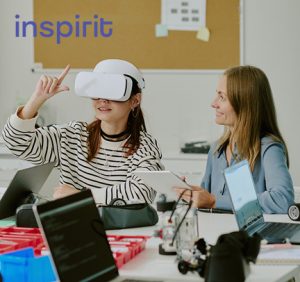
Bridging the Gap to Successful Project-Based Learning with Inspirit
There is no better way to complement your Project-Based Learning (PBL) initiatives than by creating engaging and interactive experiences in virtual reality (VR). VR provides users with a computer-generated simulation of a 3D image or environment that can be interacted with in a seemingly real and physical way. Inspirit offers user-friendly, innovative VR headsets that […]
Teq is Headed to FETC!
Teq is off to the 2026 Future of Education Technology Conference (FETC)! Being held from January 11th to January 14th, 2026, this top-notch event is being hosted at the Orange County Convention Center in Orlando, FL! Demo innovative products, grab some swag, or say hello to the team at booth #2730. Tune in to interactive […]
Introducing the New AI Literacy and Instruction Micro-credential!
The landscape of K-12 education is rapidly evolving, driven by the emergence of Artificial Intelligence. Educators and administrators need more than just introductory knowledge; they need a structured, practical path to mastery. We are excited to announce the launch of the AI Literacy and Instruction Micro-credential Playlist! This comprehensive, seven-session video series is designed specifically […]