3 Ways to Personalize Learning for Exceptional Students
Savannah Moffett
SavannahMoffett
Blog
When it comes to creating lesson plans that meet the individual needs and goals of our students, it can feel a bit overwhelming. Knowing exactly how to teach one concept in multiple ways to engage our students is a special skill. The No Limits Method has helped me learn this skill and today, I’m going to share some of my best strategies to personalize learning for our special needs students. The following three strategies are very beneficial in catering to the needs and goals of each student during my lessons.
1. Small group instruction
Many of us are aware that small group instruction is a useful tool within our teacher toolbox, but the most important aspect is how we categorize our students. Step one begins with evaluating all the characteristics of my students. To name a few, I consider:
- Communication abilities
- Motivation factors
- Personal and therapeutic goals
- Strengths and/or weaknesses of each student in relation to the subject
- Cognitive ability
- Adaptations required for the lesson
After I consider these aspects for each student, I place my students into small groups based on common characteristics and adaptations. For example, if I have three students who use an eye-gaze device for communication, I will group them together. I will also group students based on their therapeutic goals and/or cognitive levels. Grouping in this way will assist my team and I to focus on those specialized needs and promote more engagement.
2. Motivating instruction
Grouping students based on their motivation is a powerful tool I often use. After I have grouped students based on similar characteristics and adaptations, I then consider what motivates them to participate within a lesson. This helps me plan and deliver a lesson that’s sure to get their attention. For example, I may have students who prefer hands-on activities and experiences. I also may know that one of their occupational therapy goals is to stack blocks, incorporating fine and gross motor skills. So, when I deliver a math lesson on addition, I would set up an activity involving that skill, that ends in students solving simple addition problems.
3. Using learning stations
Once my students are properly grouped, I then maximize the use of my room. While I plan my lessons, I thoroughly evaluate the setup of my lesson to meet the needs of my students and their groups. I plan the setup of learning stations that will make instruction easier and meet the goals of my students. An easy way to implement this is the use of the sensory bins I incorporate within my lessons and in our learning stations. Many of my students have sensory needs, so I tend to make a sensory bin for every lesson, to incorporate activities that can meet those needs and help students to focus on the lesson. Check out course sixteen in our micro-credential series, Physical Movement and Sensory Integration, to learn more about how we work to integrate movement and sensory needs within the classroom.
When learning sight words, a great bin to create is one with shaving cream for letter tracing or foam letters for identification and spelling. Applied within a lesson, I would have the students trace out the letters of their new word, with or without assistance, based on their cognitive level and physical ability. The bin could also be used by pulling the foam letters out of the shaving cream (or material of your choice) to identify them and form the word.
Learning stations allow small groups to be more effective, engaging, and help us organize based on the needs of our classroom.
These three strategies are just a few easy and valuable tips to implement within your classroom! If you are interested in learning more on personalized learning, look at our micro-credential. We are here to be your learning resource and exceptional education experts!
Savannah Moffett, Exceptional Education Teacher & Content Creator
CORE CONCEPT
To personalize the education of students with complex disabilities, we must take those disabilities and the necessary adaptations for them into account. These are individual aspects of each student’s development and growth.
Once we understand this, we can better grasp the collaborative aspect of teaching these students. What they need to make developmental progress is directly linked to how they do things in the world through communication, movement, etc. Understanding each student individually requires continuous collaboration with other professionals (e.g., therapists, administrators, etc.). This collaborative effort is facilitated by the No Limits Method and its resources.
In this month’s blog, Savannah explains how those collaborative strategies and resources have been put to use in her classroom. These strategies help her streamline her lesson planning and delivery, which in turn helps each student grow and succeed. Personalizing learning in ways that are relevant to students and the goals that they’re pursuing, enables us to unlock the full potential of every student!

Cheyne Joslin, Director of Research & Efficacy
For more tips, tricks, and tools for teaching in and out of the classroom, check out more content on the Teq Talk blog or our YouTube channels OTIS for educators and Tequipment.
We also offer virtual professional development, training, and support with OTIS for educators. Explore the technology and strategies that spark student success — no matter where teaching or learning are happening!
Follow us on social:
 edteq
edteq  OTIS4educators | Teq Products | iBlocks
  OTIS4educators | MyTeq
  Teq
Teq
0 thoughts on “3 Ways to Personalize Learning for Exceptional Students”
Related Articles & Other Recommended Reading
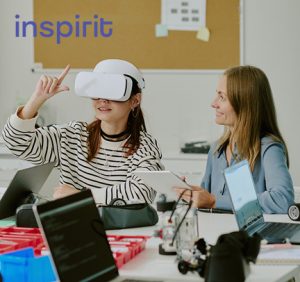
Bridging the Gap to Successful Project-Based Learning with Inspirit
There is no better way to complement your Project-Based Learning (PBL) initiatives than by creating engaging and interactive experiences in virtual reality (VR). VR provides users with a computer-generated simulation of a 3D image or environment that can be interacted with in a seemingly real and physical way. Inspirit offers user-friendly, innovative VR headsets that […]
Teq is Headed to FETC!
Teq is off to the 2026 Future of Education Technology Conference (FETC)! Being held from January 11th to January 14th, 2026, this top-notch event is being hosted at the Orange County Convention Center in Orlando, FL! Demo innovative products, grab some swag, or say hello to the team at booth #2730. Tune in to interactive […]
Introducing the New AI Literacy and Instruction Micro-credential!
The landscape of K-12 education is rapidly evolving, driven by the emergence of Artificial Intelligence. Educators and administrators need more than just introductory knowledge; they need a structured, practical path to mastery. We are excited to announce the launch of the AI Literacy and Instruction Micro-credential Playlist! This comprehensive, seven-session video series is designed specifically […]