Jamming in the ELA Classroom
Emma Foley
Senior Curriculum Specialist
Blog
Jamboard is just one of the digital learning tools that rose in popularity when educators went remote. While there are other types of competing interactive whiteboard software out there, there are many reasons that Jamboard has stuck around even after most teachers have returned to brick and mortar.
You may already know that Jamboard, like other virtual whiteboards, can give students and teachers the ability to write, draw, and erase like a traditional whiteboard, but did you know that there are other features that can enhance your reading or writing activities including the ability to import from other Google applications or even a Google search? Let’s get started and explore some of Jamboard’s features together!
The sticky note feature
The sticky note feature is Jamboard’s most popular and well-known feature. Maybe you are already having students use sticky notes to write their thoughts and drag it to a section of your whiteboard space (each is called a ”jam”). If you’re new to Jamboard’s sticky note feature, it only takes a couple quick steps to get students contributing to a jam!


Now that you know how to use it, you may be asking, what does this look like in the ELA classroom?
Some teachers have begun using this feature to transform their traditional shared reading activity at the elementary level. While reading a short story or novel together, students can drag sticky notes to three columns: “text-to-self”, “text-to-text”, and “text-to-world” to share their connections with their classmates. A “making connections” activity has the power to help students become successful and independent readers, but adding in a collaborative component using Jamboard makes it much more powerful! Students who are learning how to make authentic connections can learn from one another as the connections appear on the jam in real time.


It’s helpful to have a list of personal connections ready to go when reading a particular text to provide explicit modeling for students. Then, open up the opportunity for them to contribute their own to the jam. You also may choose to display prompts in a visible location in the classroom to support students during an activity of this kind. Visual aids can be a huge support for students in any academic setting, whether for general or special education. Possible prompts can include:
Text-to-self connections:
- What does this story remind you of?
- Can you relate to the characters in the story?
- Does anything in this story remind you of anything in your own life?
Text-to-text connections:
- Does this remind you of another book you have read?
- How is this text similar to other things you have read?
- How is this text different from other things you have read?
Text-to-world connections:
- What does this remind you of in the real world?
- How are events in this story similar to things that happen in the real world?
- How are events in this story different from things that happen in the real world?
If you’re looking for other great resources to help you improve your making connections lessons in your elementary classroom, check out this book list for making connections, or this list of picture books.
Text and markup tools
Another key feature of Jamboard is the text and markup tools. Of course, other interactive whiteboard programs have similar tools, but when you combine these tools with a fun template, like the book review template below, you will likely see students displaying more willingness to share their thoughts and feelings about what they have read.


Import ability
One thing that stands out about Jamboard is their ability to import from other Google Workspace applications. If you aren’t brand new to Jamboard, you have probably run into issues when designing templates and other instructional materials. The sticky note, text, and markup tools are great, but there are definite limitations to Jamboard when it comes to switching up font style, background color, image integration, and other tools to make your jams more aesthetically appealing.
The import abilities of Jamboard help to combat this. You can essentially design an activity on any other Google Workspace application and import them as either an image or background to spice up your activities. It is worth taking advantage of this workaround when designing graphic organizers and other instructional activities to support writing instruction, especially during the brainstorming process.
Some go-to Google Apps for this are Google Slides, Docs, and Drawings as shown in the examples below:


To tie it all together, each of these templates showcased could be completed using any combination of the markup, text box, and sticky note tools mentioned earlier. Let’s be honest, who doesn’t love opportunities for student choice?
Getting started
We haven’t even scratched the surface when it comes to the templates and instructional activities you can set up for the students in your ELA class. If you are ready to create some activities of your own, start with Google Slides, Docs, or Drawings and play around with the built-in organizers and tab. Then, it’s just a matter of setting your students up with the jam link and letting them take the reins.


Visit the content library on OTIS for educators for more information on using Google Apps like Jamboard, ELA ideas, and much more.
For more tips, tricks, and tools for teaching in and out of the classroom, check out more articles on the Teq Talk blog.
We also offer virtual professional development, training, and remote learning support for educators with OTIS for educators. Explore the technology, tools, and strategies that can spark student success — no matter where teaching or learning are happening.
0 thoughts on “Jamming in the ELA Classroom”
Related Articles & Other Recommended Reading
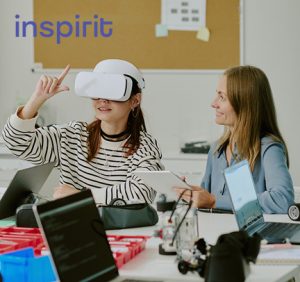
Bridging the Gap to Successful Project-Based Learning with Inspirit
There is no better way to complement your Project-Based Learning (PBL) initiatives than by creating engaging and interactive experiences in virtual reality (VR). VR provides users with a computer-generated simulation of a 3D image or environment that can be interacted with in a seemingly real and physical way. Inspirit offers user-friendly, innovative VR headsets that […]
Teq is Headed to FETC!
Teq is off to the 2026 Future of Education Technology Conference (FETC)! Being held from January 11th to January 14th, 2026, this top-notch event is being hosted at the Orange County Convention Center in Orlando, FL! Demo innovative products, grab some swag, or say hello to the team at booth #2730. Tune in to interactive […]

Introducing the New AI Literacy and Instruction Micro-credential!
The landscape of K-12 education is rapidly evolving, driven by the emergence of Artificial Intelligence. Educators and administrators need more than just introductory knowledge; they need a structured, practical path to mastery. We are excited to announce the launch of the AI Literacy and Instruction Micro-credential Playlist! This comprehensive, seven-session video series is designed specifically […]