Incorporating Green Practices Into Your Classroom
Nicole Mathew
Curriculum Specialist
Blog
The average American produces over 4 lbs of trash a day, which can culminate in up to 56 tons per year.1 While many of us try to recycle as much as possible, not all of our recyclables are deemed worthy by receiving facilities, or are discarded for other reasons. Estimates by experts vary when it comes to the actual amount that gets discarded. Often, these materials end up in landfills because we throw them away instead. In New York City, for example, residents recycle only 17% of their total waste2, according to GrowNYC. So, how can we be more mindful and help reduce our environmental impact?
Classroom waste audits
Having students complete a waste audit of the classroom can be a powerful awareness tool and help them incorporate more green practices into the learning space. In a waste audit, students collect all of the trash containers around the room at the end of the day, class period, etc. The students weigh the trash and separate them into categories like recyclables, landfill items, compost, and reusables. The separated categories are also weighed. The audit can be done over the course of several school days or weeks, depending on your schedule and goals. This can also be something that students can come together for and do as a class. For example, every student can be assigned a day to sort and assess trash. This process may look a little different if the school already has recycling programs in individual classrooms. Students and teachers should also confirm if recycle bins are being disposed of by the school in the appropriate manner.
School projects reimagined
Students complete dozens of projects over the course of a school year for various classes. That means in the average school building, hundreds of projects are being completed annually, and are potentially contributing to this growing global trash problem. Many of these projects start with new materials that students end up throwing away. Rather than providing consumable materials for students, encourage them to save and reuse items that otherwise would be discarded. There are many reusable items that would make for great craft supplies and building materials. These include plastic bottles, takeout containers, aluminum cans and bottles, shipping boxes, packaging materials, bubble wrap, food packaging, empty paper towel/toilet paper rolls, disposable tableware , scrap paper, broken binders, empty markers, and other discarded classroom supplies. All of these practices can bring awareness to students about the waste they produce, and how they can make smarter choices that benefit the health of our one and only Earth.
To explore more green ideas for the classroom, check out our companion course Recycling Robots, or check out free activities like “How Can I Help the Environment?” in the Lessons & Activities section of OTIS.
For more tips, tricks, and tools for teaching in and out of the classroom, check out more articles on the Teq Talk blog.
We also offer virtual professional development, training, and remote learning support for educators with OTIS for educators. Explore the technology, tools, and strategies that can spark student success — no matter where teaching or learning are happening.
Footnotes
0 thoughts on “Incorporating Green Practices Into Your Classroom”
Related Articles & Other Recommended Reading
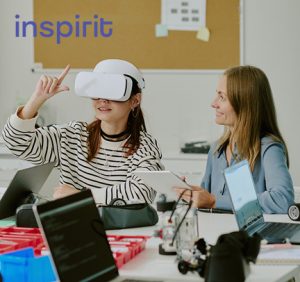
Bridging the Gap to Successful Project-Based Learning with Inspirit
There is no better way to complement your Project-Based Learning (PBL) initiatives than by creating engaging and interactive experiences in virtual reality (VR). VR provides users with a computer-generated simulation of a 3D image or environment that can be interacted with in a seemingly real and physical way. Inspirit offers user-friendly, innovative VR headsets that […]
Teq is Headed to FETC!
Teq is off to the 2026 Future of Education Technology Conference (FETC)! Being held from January 11th to January 14th, 2026, this top-notch event is being hosted at the Orange County Convention Center in Orlando, FL! Demo innovative products, grab some swag, or say hello to the team at booth #2730. Tune in to interactive […]

Introducing the New AI Literacy and Instruction Micro-credential!
The landscape of K-12 education is rapidly evolving, driven by the emergence of Artificial Intelligence. Educators and administrators need more than just introductory knowledge; they need a structured, practical path to mastery. We are excited to announce the launch of the AI Literacy and Instruction Micro-credential Playlist! This comprehensive, seven-session video series is designed specifically […]