Getting Started with a Flipped Classroom
Nicole Mathew
Curriculum Specialist
News
After coming off of a unique school year in which many teachers worked in either fully remote or hybrid learning environments, the notion of what works in a classroom has changed. One such model that some teachers adopted to meet the needs of their students was that of a flipped classroom. It is important to note that flipped learning existed as a practice prior to COVID-19 and was not created in response to hybrid learning. A flipped classroom is a type of blended learning model in which students do the content learning at home instead of at school. When students come to school, teachers use class time for guided practice, hands-on-learning experiences, and personalized support. This type of learning is a shift from what many call the traditional classroom model of “sage on the stage” to more of a “guide on the side” style of learning.
Benefits and considerations for the flipped classroom
There are several benefits to adopting a flipped classroom model. To start, students take ownership of their learning and become more independent. A flipped classroom relies on students doing the heavy lifting. Because of this, students tend to be more engaged in the learning process since they are active participants from the moment they enter the classroom. By not having the need for a mini lesson at the beginning of class, there is more time for higher order cognitive activities and increased student collaboration. Furthermore, since student understanding is assessed prior to coming to class or right at the start of class, teachers are able to provide more personalized support and feedback to students throughout the time students are in their room. Lastly, because course content is made available digitally, it can be accessed anywhere and anytime. This means that students can review content on their own time, if need be, instead of trying to remember what the teacher said or looking back to decipher class notes.
While there are many benefits, there are also some potential drawbacks to flipping your classroom that are important to consider. One of which is that this model relies on students actually completing the learning activities at home. If students do not review the instructional videos and readings at home, then they will not be prepared to practice what they have learned in school the next day. This takes valuable time away from both teachers and students. Another possible disadvantage is that this model heavily relies on students having access to devices to view materials at home. This has the potential to make learning difficult for students who do not have these resources.
How to Flip Your Classroom
When planning to flip your classroom, it is important to know that you do not have to convert to a 100% flipped learning approach. You can plan to do this a few days a week, or only with a certain class/student grouping, depending on what works best for you and your students. If you’re ready to set up your flipped classroom, it’s time to prepare, execute, and reflect!
Prepare the flip
A flipped classroom requires more teacher preparation, as you must prepare the instructional content that you will have students complete at home. As always, start with a clear goal for what students should know and be able to do with regards to the content. Then, determine how you will assess student understanding, and what you will have students do to apply and practice their knowledge in class as well as how you will push students to go further. Then, determine what materials students will need to access at home— instructional videos recorded using a screencasting software, reading assignments, slideshows like PowerPoint or Google Slides, etc. Consider making these materials even more engaging by using interactive digital tools like Edpuzzle, Playposit, Nearpod, or Pear Deck. Finally, have at-home resources ready to be pushed out to students before the end of the school day to accommodate varying at-home schedules.
Execute the flip
As you try out a flipped classroom, be sure to explicitly model expectations for students so they know exactly what is expected of them and communicate this clearly with parents as well. You may wish to walk students through a heavily guided trial run a few times before expecting them to follow this model independently. It is also worth mentioning again that you can plan to do a slow roll-out to help facilitate the transition. As you push out the learning materials to students at home, be sure to hold them accountable for the expectations you have set. This can help students to become the more independent learners we desire and reduce the risk that students will not learn the content at home to be prepared for the work that happens in the classroom.
Reflect on flipping
Reflection is critical to a successful classroom, and a flipped classroom is no exception. As you prepare and deliver virtual instructional content, assess students, and carry out your student-led activities, you should always be self-reflecting. Review each lesson/activity and modify your approach as needed to help give students the best learning experience possible. There is never any harm in eliminating what does not work and trying something new. In addition to self-reflecting, consider explicitly asking students for feedback so you can further meet their needs.
As you go through these steps, remember that this process is cyclical and that your approach to flipping your classroom can be constantly evolving. Also, keep in mind that there is no one right way to provide flipped learning experiences. Do what is best for you and your students to provide them with a rich learning environment.
For more tips, tricks, and tools for teaching in and out of the classroom, check out more articles on the Teq Talk blog.
We also offer virtual professional development, training, and remote learning support for educators with OTIS for educators. Explore the technology, tools, and strategies that can spark student success — no matter where teaching or learning are happening.
0 thoughts on “Getting Started with a Flipped Classroom”
Related Articles & Other Recommended Reading
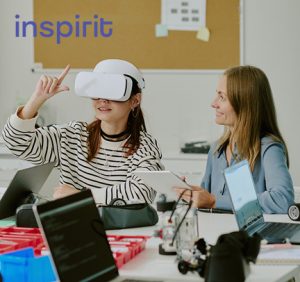
Bridging the Gap to Successful Project-Based Learning with Inspirit
There is no better way to complement your Project-Based Learning (PBL) initiatives than by creating engaging and interactive experiences in virtual reality (VR). VR provides users with a computer-generated simulation of a 3D image or environment that can be interacted with in a seemingly real and physical way. Inspirit offers user-friendly, innovative VR headsets that […]

Teq is Headed to FETC!
Teq is off to the 2026 Future of Education Technology Conference (FETC)! Being held from January 11th to January 14th, 2026, this top-notch event is being hosted at the Orange County Convention Center in Orlando, FL! Demo innovative products, grab some swag, or say hello to the team at booth #2730. Tune in to interactive […]
Introducing the New AI Literacy and Instruction Micro-credential!
The landscape of K-12 education is rapidly evolving, driven by the emergence of Artificial Intelligence. Educators and administrators need more than just introductory knowledge; they need a structured, practical path to mastery. We are excited to announce the launch of the AI Literacy and Instruction Micro-credential Playlist! This comprehensive, seven-session video series is designed specifically […]