Teaching AI to Young Learners, Is It Worth It?
Kasey Campbell
Copywriter
News
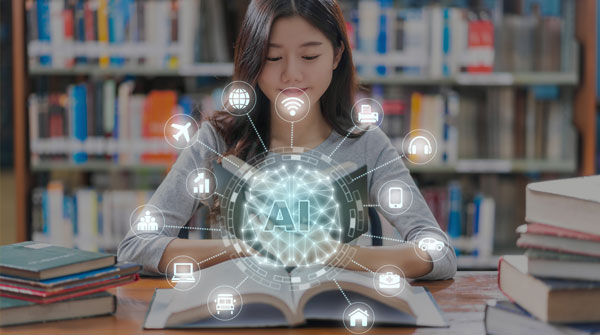
We are fortunate to live in a world with enough technological advancements to make our daily lives easier. One of these leading forms of technology comes in the form of AI, or artificial intelligence. It has been taking over the mainstream media. With the ability to mimic human intelligence and perform cognitive functions, it’s a no-brainer that this recent phenomenon has been making headlines. With notable programs such as ChatGPT and Google Bard, AI has quickly incorporated itself into the world of education. Of course, it has its drawbacks. This includes students using it for an ‘easy way out’ of assignments, or blatantly cheating. However, it may just be beneficial to incorporate AI into our curriculum. This can even start with students as young as the early childhood age group. So, the question is, should we be teaching AI to young learners?
Early childhood and the age of technology
Recently, the incorporation of educational technology, or edtech, in classrooms has affected how students learn. As today’s students have become immersed in the digital age, further advancing their knowledge of technology can help them get a head start. There are many edtech solutions available for student use, such as robotics kits, coding kits, 3D printers, and more. This is a great way to ease students into STEM concepts before they take on AI. They can also help students become accustomed to robotics and coding concepts. For example, products such as the KIBO Robot from KinderLab Robotics can help students K-12 learn concepts like coding, programming, and how to handle advanced tech. These products are easy to use for young learners and starting early. They will also help students really grasp those more advanced STEM concepts as they progress.
Are students too young to learn about AI?
In the case of AI, which may seem like an incredibly complicated subject, it may be beneficial for educators to teach their little learners about AI and the fundamentals of computer science. Not only can this help them dip their toes into the world of technology, but it can also help them build digital literacy and learn to make smart choices online. Additionally, state standards have been emphasizing the introduction of STEM curriculum for younger K-12 students. The younger they start, the better.
How can we start teaching AI to young learners? First, it is important to emphasize to children that AI is not a ‘magic’ solution, but instead, a computer program or a machine. This will allow them to understand that AI is not the end-all be-all to their path in education. Instead, it is a helpful tool that they can use to think critically on their own. You can start by having students ask simple questions on AI platforms such as ChatGPT in order for them to get a feel for it. You can connect AI back to other skills like coding to show students how it fits into the larger concepts of computer science and digital citizenship.
AI and KinderLab Robotics
There are tons of advantages to incorporating AI in this way. For example, young students will be able to develop basic computational thinking skills using AI. This article by Jason Innes, Director of Curriculum, Training, and Product Management for KinderLab Robotics, goes into more detail about the process of easing AI into your K-12 curriculum.
We may never know what brand-new type of technology will make waves next. All we can do for now is embrace the ever-changing digital world. It is important for educators to be able to balance building digital fluency while maintaining the integrity of their students.
For more information on AI, check our OTIS course, Enhancing Your Favorite Classroom Tools with AI, and Artificial Intelligence in Education: What Do We Need to Know to get started with your AI journey.
For more tips, tricks, and tools for teaching in and out of the classroom, check out more content on the Teq Talk blog or our YouTube channels OTIS for educators and Tequipment.
We also offer virtual professional development, training, and support with OTIS for educators. Explore the technology and strategies that spark student success — no matter where teaching or learning are happening!
Follow us on social:
 edteq
edteq  OTIS4educators | Teq Products | iBlocks
  OTIS4educators | MyTeq
  Teq
Teq
0 thoughts on “Teaching AI to Young Learners, Is It Worth It?”
Related Articles & Other Recommended Reading
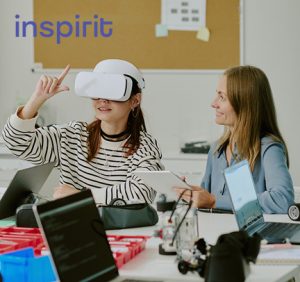
Bridging the Gap to Successful Project-Based Learning with Inspirit
There is no better way to complement your Project-Based Learning (PBL) initiatives than by creating engaging and interactive experiences in virtual reality (VR). VR provides users with a computer-generated simulation of a 3D image or environment that can be interacted with in a seemingly real and physical way. Inspirit offers user-friendly, innovative VR headsets that […]
Teq is Headed to FETC!
Teq is off to the 2026 Future of Education Technology Conference (FETC)! Being held from January 11th to January 14th, 2026, this top-notch event is being hosted at the Orange County Convention Center in Orlando, FL! Demo innovative products, grab some swag, or say hello to the team at booth #2730. Tune in to interactive […]
Introducing the New AI Literacy and Instruction Micro-credential!
The landscape of K-12 education is rapidly evolving, driven by the emergence of Artificial Intelligence. Educators and administrators need more than just introductory knowledge; they need a structured, practical path to mastery. We are excited to announce the launch of the AI Literacy and Instruction Micro-credential Playlist! This comprehensive, seven-session video series is designed specifically […]