Tapping Into the Tools of Google Docs
Adam Fragale
Curriculum & PD Specialist

It’s now been a little over three years since the pandemic shut down schools and sent learning online. Since that time, schools have had to go through some major technological adjustments. Now, it’s time to revisit the amazing tools that were pushed to the forefront. Learning to use these tools to their full potential can build skills such as problem solving, critical thinking, and writing. With the dawn of AI tools like ChatGPT flooding our classrooms, we need to focus our attention on teaching students essential skills like research and writing, without having to resort to these tools to do the work for them.
I was teaching 6th grade social studies and ELA when the world shut down. Luckily for my students and I, we had Google Classroom in place. At the time, I was not using it to its full potential, but transitioned into full time use with relative ease. However, my students, who were born into the digital native age, struggled to transition into online and digital learning. I felt frustrated at first, thinking that my students just didn’t want to do the work. Although, I soon realized that even though they grew up with access to iPads, cell phones, video games, and all things digital, they never really learned how to utilize these items as learning tools.
Utilizing all the features of Docs
The first book report I had assigned students during the pandemic was when I learned that they struggled to use the tools available to them. Students would have notes from their readings spread across different notebooks or stored on their Drive. They would do further research through a Google search of some sort. Then, they would print out the information they found, and eventually start a new Google Doc to try and put it all together as a report. They were utilizing Docs strictly as a word processor to type up their response to one of the book report questions. It was a long and tedious process in which many of them would lose their focus, affecting their writing. I realized quickly that there was a lot of work to do.
Technology is here to stay. It has definitely made life easier when it comes to having to do research and write papers. However, if you have never learned how to properly research and write papers in the first place, the tools available to you will mean nothing and that’s where websites like ChatGPT become very enticing for students. To discourage students from using these sources as a short-cut, we must teach them essential skills using digital tools like Google Docs.
Getting started with Google Tools
Focusing on the Tools drop down menu in Docs is where you should start. There are a ton of amazing features in Google Docs that will enhance your students’ experience. The first tool to introduce your students to is the Explore option under the Tools tab. This allows your students to do research on the web directly in their document! They can highlight anything in their Doc, for example the title of the book or an author, and click Explore. A panel will open on the right with information, enabling students to do research while not having to interrupt their train of thought. You are able to access anything on the web, search for images, or access anything saved on your Google Drive (the Drive feature is not available on the mobile app). This option is also available in Google Sheets and Slides. This amazing in-app tool is a game-changer when used properly.
Using the Citations tool
Next up is the Citations tool. This tool will manage your students’ sources that they may want to use when writing their reports. This can be accessed directly from the Explore panel or in the Tools drop down menu. This tool does all the work for the students regarding citing the sources that they are using for their research. As the teacher, you should first teach about the importance of citing sources and what it means to cite. Formatting options can be changed with MLA, APA, and Chicago styles available. When selected from the Explore panel, the citation will be added as a footnote. When selected from the Tools menu, the Citations panel will open on the right and any citations will be added in as a parenthetical. There will also be an option to add a works cited or reference page. With this tool, students don’t have to worry about the nitty gritty of citation styles. They just need to know when to cite and how to use the tool.
Try out Explore and Citations with your students and watch as their writing improves! Once they have the hang of these two, try some other useful digital tools like spelling and grammar checkers, dictionaries, translations, etc. When introduced properly, digital tools can be wonderful learning opportunities and help teach important skills. Students can have all the tools in the world, some of which might seem like ways to avoid working. However, if they are not taught how and why to use these tools, they will never be able to use them properly and build something great.
More Google “how-tos'” on OTIS
For more useful information and courses on Google Drive, check out our course library on OTIS for educators. Additionally, take a look at our Google Educator midro-credential for all things Google.
For more tips, tricks, and tools for teaching in and out of the classroom, check out more content on the Teq Talk blog or our YouTube channels OTIS for educators and Tequipment.
We also offer virtual professional development, training, and support with OTIS for educators. Explore the technology and strategies that spark student success — no matter where teaching or learning are happening!
Follow us on social:
 edteq
edteq  OTIS4educators | Teq Products | iBlocks
  OTIS4educators | MyTeq
  Teq
Teq
0 thoughts on “Tapping Into the Tools of Google Docs”
Related Articles & Other Recommended Reading
Bridging the Gap to Successful Project-Based Learning with Inspirit
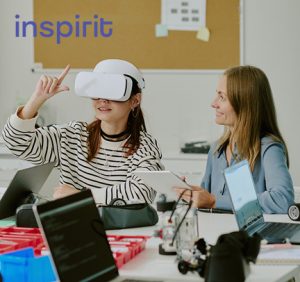
There is no better way to complement your Project-Based Learning (PBL) initiatives than by creating engaging and interactive experiences in virtual reality (VR). VR provides users with a computer-generated simulation of a 3D image or environment that can be interacted with in a seemingly real and physical way. Inspirit offers user-friendly, innovative VR headsets that […]
Teq is Headed to FETC!
Teq is off to the 2026 Future of Education Technology Conference (FETC)! Being held from January 11th to January 14th, 2026, this top-notch event is being hosted at the Orange County Convention Center in Orlando, FL! Demo innovative products, grab some swag, or say hello to the team at booth #2730. Tune in to interactive […]

Introducing the New AI Literacy and Instruction Micro-credential!
The landscape of K-12 education is rapidly evolving, driven by the emergence of Artificial Intelligence. Educators and administrators need more than just introductory knowledge; they need a structured, practical path to mastery. We are excited to announce the launch of the AI Literacy and Instruction Micro-credential Playlist! This comprehensive, seven-session video series is designed specifically […]