Supporting Students with Sensory Processing Disorder
Emma Foley
Senior Curriculum Specialist
Blog
Sensory processing disorder (SPD), is sometimes described as a neurological “traffic jam.” The brain of a child suffering from SPD is prevented from receiving what it needs to interpret sensory input appropriately. In recent years, many researchers have banned together to make the claim that SPD is a distinct disorder, independent from autism or ADHD, even though it has yet to be recognized and categorized separately from these disorders.
SPD facts and figures
Personal recounts from educators (and parents) who have worked with children who have displayed a tantrum-like, stubborn behavior associated with SPD often mention a fixation on a particular sensation or object. For example, a component like clothing, such as a tight collar or tag, are very common triggers associated with SPD. However, what most people don’t know is that SPD can manifest in a number of different ways. Some children with SPD display this maladaptive behavior in response to other sensory inputs, such as extreme heat or cold.
The official numbers are difficult to know, but one study showed that SPD is actually more common than you may initially think, impacting at least 1 in 20 children. What these numbers should tell you as either an educator or parent is that you are not alone, and somewhere out there, there is another parent or educator looking for support too.
Where can I find support?
When it comes to support for children with SPD, it might be your first instinct, in the moment, to simply tell the child displaying stubborn behavior due to SPD, to “just deal with it.” However, many children with SPD are not capable of “just dealing with it,” nor is it the best way to work through any SPD issues. When it comes to SPD, and your role as either a teacher or parent, the key is patience and empathy.
You will also need to inquire for support, as it isn’t easy to help a child struggling with SPD. It’s easy to feel helpless, especially when cutting out a tag from a piece of clothing that is causing discomfort just doesn’t do the trick. You may still see your student, or your child, unable to move on with the rest of their day. Been there, done that! As a former special education teacher and a parent of a child with an IEP, I am a huge advocate for utilizing resources to connect with others. Sharing your frustrations about this issue can be very beneficial for you and your student or child.
If you believe your student or your child might be showing signs of SPD, the best next step is to seek out support from a trained professional, starting with an evaluation. Traditional support for students with SPD might include occupational therapy with a sensory integration approach.
What can I personally do?
Wouldn’t it be great if we could snap our fingers and become a trained occupational therapist who just has the answers and can correct the issue in a day or two? Of course, but as I already mentioned, patience is key, as well as a little bit of dedication.
SPD may be the only behavioral hurdle you are noticing, or you may have a couple of other behaviors you are trying to address. I encourage educators and parents to introduce some of these strategies that I have found to be helpful for those who may have SPD or similarly presenting issues, even if they have not been diagnosed.
1) Go tagless
There are many different affordable brands that have gone tagless. For example, Zappos and the Cat & Jack line at Target, have both acknowledged the benefits of going tagless, sticking to certain materials, and avoiding embellishments such as sequins, pom poms, and other add-ons that may upset a child with SPD.
2) Routine, routine, routine
No one wants to get up earlier than the sun, but by starting the day earlier, you will give yourself more than enough time to deal with any issues that may arise. This is true for all transitional times of the day when a child might have a sensory issue. Budgeting extra time will reduce the likelihood of everyday tasks turning into a full-on battle. With my son, I lay out the full week’s worth of clothes on Sunday so I can pivot on an outfit if he wakes up that morning with elevated senses. You can also make a routine out of having your child make decisions regarding tasks that may cause sensory issues (like picking out their clothes), so that they feel a sense of ownership.
3) Write a social story
I started off my teaching career working with many students with very involved special needs. Many of these students thrived with social stories to help them get through the routines of the day. Social stories are a tool to explain social situations and routines, usually for students with ASD, but they can be used for any student who might benefit from them. Luckily, especially in the post-COVID world, there are many different platforms and applications that can help you make a social story that actually resembles a real book.
Some of them come at a fee, such as a My Story School eBook Maker, Storyboard That, or BoomWriter, but there are also some really great free programs like Book Creator or Canva if you want to print individual pages together as a book.To learn more about routines, social stories, and other exceptional education supports, check out our Special Education category on our online professional development platform, OTIS for educators.
For more tips, tricks, and tools for teaching in and out of the classroom, check out more content on the Teq Talk blog or our YouTube channels OTIS for educators and Tequipment.
We also offer virtual professional development, training, and support with OTIS for educators. Explore the technology and strategies that spark student success — no matter where teaching or learning are happening!
Follow us on social:
 edteq
edteq  OTIS4educators | Teq Products | iBlocks
  OTIS4educators | MyTeq
  Teq
Teq
0 thoughts on “Supporting Students with Sensory Processing Disorder”
Related Articles & Other Recommended Reading
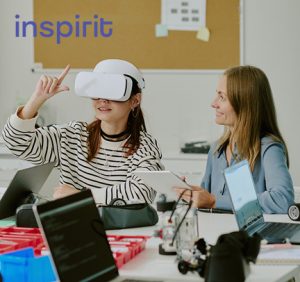
Bridging the Gap to Successful Project-Based Learning with Inspirit
There is no better way to complement your Project-Based Learning (PBL) initiatives than by creating engaging and interactive experiences in virtual reality (VR). VR provides users with a computer-generated simulation of a 3D image or environment that can be interacted with in a seemingly real and physical way. Inspirit offers user-friendly, innovative VR headsets that […]

Teq is Headed to FETC!
Teq is off to the 2026 Future of Education Technology Conference (FETC)! Being held from January 11th to January 14th, 2026, this top-notch event is being hosted at the Orange County Convention Center in Orlando, FL! Demo innovative products, grab some swag, or say hello to the team at booth #2730. Tune in to interactive […]

Introducing the New AI Literacy and Instruction Micro-credential!
The landscape of K-12 education is rapidly evolving, driven by the emergence of Artificial Intelligence. Educators and administrators need more than just introductory knowledge; they need a structured, practical path to mastery. We are excited to announce the launch of the AI Literacy and Instruction Micro-credential Playlist! This comprehensive, seven-session video series is designed specifically […]