Understanding Student Potential
Savannah Moffett
SavannahMoffett
Blog

As educators, it’s only natural for us to want to help our students achieve their full potential during their time with us on their academic journey. Often, it can be challenging to know how to see their full potential. I’m here to tell you to not hold back, set those expectations for your students and watch them surpass those goals. When you set your students up for success there is truly No Limit to their potential.
How to know students’ potential
Where do you start to know how and what expectations to set for your students? First, start with just getting to know your students as individuals and not just their diagnosis. We can get caught up in what their diagnosis says and think that we can only interact with them in terms of their developmental stage. I have found this to not be the case in my own neurodiverse classroom. Some of my students know much more than what their suspected developmental stage would suggest.
To get to know them better and as individuals, simply interact with them like you would any child. Set up interactive activities such as games or even group discussion with their communication devices. While interacting with these games and discussion you can use targeted questions to understand them better. I have learned how to do this through the strategies provided by the No Limits Method. If we, as teachers, don’t have the right tools to help our students meet those high expectations, they will struggle to make progress even with all the hard work that we do. Thankfully, the Method gives teachers the tools they need.
Meeting goals and reaching potential
Through daily interaction and continued collaboration, you will observe progress in students’ engagement, communication, and knowledge of what they are learning. These practices are important from the beginning of each student’s academic journey, as they will help you to gain a better understanding of where to start with your expectations for their academic goals.
In terms of communication, this might involve facilitating their use of a communication device to participate in class and conversation. In-class activities, and how to participate in them, may also need to be modified for students with disabilities. The Method can provide support and resources in these cases; through our micro-credential courses, you will learn how to collaborate effectively with therapists (physical, occupational, and speech) who work with your students. These collaborative efforts help you as a teacher to understand what adaptations your students may need, and why they need them. In this way, you understand each student’s unique potential and how to reach it.
We must keep in mind that as we develop and work toward the expectations we set for our students, it’s going to take numerous attempts, and not all goals will be achieved after the first few tries. It takes a lot of effort for your students learn to work with their disability and the adaptations they need. To help your students get past these challenges, you must be motivated yourself. So, never stop trying, and don’t let them stop either. Using the Method and its resources has helped me set the bar high for my students, to achieve more than most people thought was possible.
If you are ready to help your students reach their full brain potential, I recommend you check out the No Limits Method Micro Credential Courses and Digital Lessons. It can help you learn new techniques such as creating deeper connections with your students, supplementing your instruction, and lesson planning. With these techniques and resources, you will be provided a better understanding of your students and their individual needs, which will allow you to set your expectations high, and know how to help them achieve their goals and grow as individuals!

Savannah Moffett, Exceptional Education Teacher & Content Creator
CORE CONCEPT
Having lived with cerebral palsy for over 30 years now, I understand what it is like to be underestimated due to my disability. When I was a child, doctors told my parents that I “would never function normally in society.”
This prognosis was unfounded, especially since I am now a PhD student, pursuing a career in academia.
Just as others believed in my potential, even when my challenges were so evident, our team at the No Limits Method wants to help others (especially teachers) to have a better sense of their students’ individual potential, and how to help them achieve it through collaboration with other professionals. A student’s true potential is only realized through this greater understanding and collaboration.
In this blog, Savannah explains how this applies in a classroom setting, along with the other resources that the No Limits Method provides!

Cheyne Joslin, Director of Research & Efficacy
For more tips, tricks, and tools for teaching in and out of the classroom, check out more content on the Teq Talk blog or our YouTube channels OTIS for educators and Tequipment.
We also offer virtual professional development, training, and support with OTIS for educators. Explore the technology and strategies that spark student success — no matter where teaching or learning are happening!
Follow us on social:
 edteq
edteq  OTIS4educators | Teq Products | iBlocks
  OTIS4educators | MyTeq
  Teq
Teq
0 thoughts on “Understanding Student Potential”
Related Articles & Other Recommended Reading
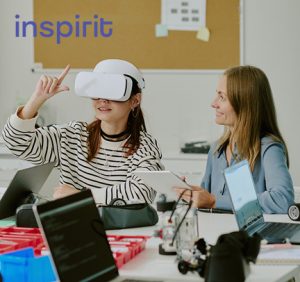
Bridging the Gap to Successful Project-Based Learning with Inspirit
There is no better way to complement your Project-Based Learning (PBL) initiatives than by creating engaging and interactive experiences in virtual reality (VR). VR provides users with a computer-generated simulation of a 3D image or environment that can be interacted with in a seemingly real and physical way. Inspirit offers user-friendly, innovative VR headsets that […]
Teq is Headed to FETC!
Teq is off to the 2026 Future of Education Technology Conference (FETC)! Being held from January 11th to January 14th, 2026, this top-notch event is being hosted at the Orange County Convention Center in Orlando, FL! Demo innovative products, grab some swag, or say hello to the team at booth #2730. Tune in to interactive […]
Introducing the New AI Literacy and Instruction Micro-credential!
The landscape of K-12 education is rapidly evolving, driven by the emergence of Artificial Intelligence. Educators and administrators need more than just introductory knowledge; they need a structured, practical path to mastery. We are excited to announce the launch of the AI Literacy and Instruction Micro-credential Playlist! This comprehensive, seven-session video series is designed specifically […]