Attaining and Evaluating Progress in Exceptional Education
Savannah Moffett
SavannahMoffett
Blog
Attaining and evaluating progress for exceptional students can be a struggle. Most often, it is difficult to fully understand what students are grasping and retaining throughout our lessons. We might try different ways to “grade” them or assess their understanding, but it seems like no standard assessment can fully explain each student’s progress as an individual. Their needs and adaptations are just as unique as the students themselves are.
Thankfully, the No Limits Method can help! The training protocol provided by the Method can help teachers, paraprofessionals, and others to think outside of the box in terms of what counts as progress. No Limits Method users will be empowered to adapt their curriculum to fit students’ needs by learning instructional strategies and therapeutic interventions to impact growth in a new way. This is Therapeutic Education, our foundational approach, which provides instructors with an opportunity to look at their academic environment with a fresh set of eyes, built in the spirit of collaboration.
Therapeutic education: progress for exceptional students
Sharing from my experience, this year I switched things up a little. I partnered with our Director of Language and Communication, a Speech Pathologist with 15 years of experience, to try something different with my students. Together, we worked to pinpoint specific sight words for the entire year. Since my students use Tobii Dynavox communication devices, we decided to use the Core First Core Words list as our sight words to further incorporate the use of their devices. After this initial decision, I incorporated our No Limits Method instructional strategies and techniques. Then, I chose one word to focus on for two weeks and taught it using multiple supports and lesson tools. To further this process, my team and I would consistently model these words throughout our day for the duration of the two weeks. We then used a progressive strategy when introducing new words which allowed us to continue to reinforce word identification through repetition.
Since I provided my students with multiple ways of learning and experiencing these words, I have had two students begin to form sentences correctly on their devices using the sight words taught during the year. They are now learning how to express their wants and needs in complete sentences using these devices, after learning their core words and understanding how to use them.
The No Limits Method and unlocking potential
Without the insight I received from being trained in the Method, I would have never known how to effectively collaborate with an expert within the field of speech-language pathology. I also wouldn’t have known how to address the proper use of augmentative and alternative communication (AAC) devices in place of traditional sight words when creating lessons for my class. In the same way, the Method can help you feel confident when consulting other professionals to find innovative ways to meet your students’ unique needs and individualize their personal educational journey. The example I’ve shared is just one of many that I’ve experienced during my time as an educator using the Method. My use of the Method and its resources for collaboration has allowed me to witness progress toward each student’s physical, cognitive, emotional, social, and spiritual goals. Experiences of genuine progress like these are exactly why our team has created the No Limits Method product lines, which include our Micro-Credential and Digital Lessons. We want every educator, regardless of their experience or background, to experience the true success that comes from collaboration, therapeutic interventions and instructional strategies. These products can help users to break boundaries in easily applicable ways to unlock each student’s potential. If you would like to learn more about the Method, I encourage you to visit the No Limits Method page on OTIS for educators. Keep an eye out for our upcoming blogs, you won’t want to miss them!
For more tips, tricks, and tools for teaching in and out of the classroom, check out more content on the Teq Talk blog or our YouTube channels OTIS for educators and Tequipment.
We also offer virtual professional development, training, and support with OTIS for educators. Explore the technology and strategies that spark student success — no matter where teaching or learning are happening!
Follow us on social:
 edteq
edteq  OTIS4educators | Teq Products | iBlocks
  OTIS4educators | MyTeq
  Teq
Teq
0 thoughts on “Attaining and Evaluating Progress in Exceptional Education”
Related Articles & Other Recommended Reading
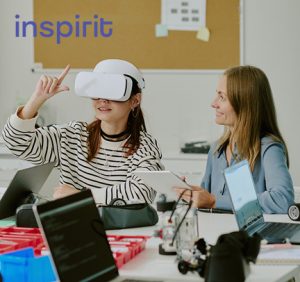
Bridging the Gap to Successful Project-Based Learning with Inspirit
There is no better way to complement your Project-Based Learning (PBL) initiatives than by creating engaging and interactive experiences in virtual reality (VR). VR provides users with a computer-generated simulation of a 3D image or environment that can be interacted with in a seemingly real and physical way. Inspirit offers user-friendly, innovative VR headsets that […]
Teq is Headed to FETC!
Teq is off to the 2026 Future of Education Technology Conference (FETC)! Being held from January 11th to January 14th, 2026, this top-notch event is being hosted at the Orange County Convention Center in Orlando, FL! Demo innovative products, grab some swag, or say hello to the team at booth #2730. Tune in to interactive […]

Introducing the New AI Literacy and Instruction Micro-credential!
The landscape of K-12 education is rapidly evolving, driven by the emergence of Artificial Intelligence. Educators and administrators need more than just introductory knowledge; they need a structured, practical path to mastery. We are excited to announce the launch of the AI Literacy and Instruction Micro-credential Playlist! This comprehensive, seven-session video series is designed specifically […]