Creating Connections: Neural Development and the No Limits Method
Cheyne Joslin
Cheyne Joslin
Blog
Throughout this blog series, we’ve discussed the unique needs of students with disabilities and how the No Limits Method product lines can help teachers, paraprofessionals, and others to meet those needs. By better understanding these needs, we can adapt our methods to help students reach their fullest potential. In fact, by meeting these needs (physical, cognitive, emotional, social, and spiritual), development can occur within the brain of each student! Through the strategies employed within the No Limits Method, we can enrich the education of these students, strengthening their brains and empowering their minds to learn! This piece will dive further into how this process can be achieved.
Neural plasticity and child cognitive development
First and foremost, it’s important to realize that disabilities from brain damage do not limit the brain’s capacity to develop and grow, as this is especially true with children. With this being said, it is now widely attested that the brain is an adaptable organ. If some part of it is damaged or weakened, the brain will adapt and reroute energy to another region to perform the function of the damaged portion. In performing this function, the brain is considered flexible or “plastic.” This capacity for adaptation is known as neural plasticity. This process is not able to be performed on its own, as it must be activated by physical activity.
Typical child development occurs when babies move around and interact with their world, leading to physical and cognitive milestone achievements. If a child can’t interact with their surroundings in a developmentally appropriate way, due to various disabilities, they are still able to learn. Their interactions simply need to be modified, assisted, and/or adapted through therapeutic and rehabilitative interventions. This is essentially the practice of neurological rehabilitation, which is training the body to retrain the brain! Every disability is different, so each child will be able to interact with their environment in different ways. With this, each student will learn differently, and unique adaptations, strategies, and techniques should be used to facilitate their learning process.
Using the No Limits Method
The No Limits Method, through its micro-credentials and digital lessons, provides teachers, paraprofessionals, and parents with resources for working with exceptional students. There is currently no other program that provides these resources and strategies for those working with exceptional students! The micro-credentials provide further insight into therapeutic interventions that may be helpful to your students, with advice on how to collaborate with professionals such as physical, occupational, and speech therapists to discover what adaptations work best to help your students.
The digital lessons demonstrate the practical applications of these resources and strategies in a classroom setting. These lessons are designed to make the planning and execution of lessons for students with diverse needs simpler and easier to manage. We know that so many teachers and other professionals working with exceptional students try their best to help, but simply lack the resources to do so. The No Limits Method is here to change the future of education for those with disabilities! If you would like to learn more about the Method, and sample the materials we provide, please visit OTIS for educators’ No Limits Method page. Together, we can unlock each student’s full potential!
For more tips, tricks, and tools for teaching in and out of the classroom, check out more content on the Teq Talk blog or our YouTube channels OTIS for educators and Tequipment.
We also offer virtual professional development, training, and support with OTIS for educators. Explore the technology and strategies that spark student success — no matter where teaching or learning are happening!
Follow us on social:
 edteq
edteq  OTIS4educators | Teq Products | iBlocks
  OTIS4educators | MyTeq
  Teq
Teq
0 thoughts on “Creating Connections: Neural Development and the No Limits Method”
Related Articles & Other Recommended Reading
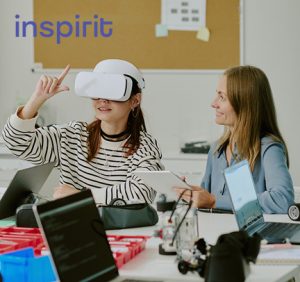
Bridging the Gap to Successful Project-Based Learning with Inspirit
There is no better way to complement your Project-Based Learning (PBL) initiatives than by creating engaging and interactive experiences in virtual reality (VR). VR provides users with a computer-generated simulation of a 3D image or environment that can be interacted with in a seemingly real and physical way. Inspirit offers user-friendly, innovative VR headsets that […]
Teq is Headed to FETC!
Teq is off to the 2026 Future of Education Technology Conference (FETC)! Being held from January 11th to January 14th, 2026, this top-notch event is being hosted at the Orange County Convention Center in Orlando, FL! Demo innovative products, grab some swag, or say hello to the team at booth #2730. Tune in to interactive […]
Introducing the New AI Literacy and Instruction Micro-credential!
The landscape of K-12 education is rapidly evolving, driven by the emergence of Artificial Intelligence. Educators and administrators need more than just introductory knowledge; they need a structured, practical path to mastery. We are excited to announce the launch of the AI Literacy and Instruction Micro-credential Playlist! This comprehensive, seven-session video series is designed specifically […]