Is Unplugging the Key to Coding Success?
Adam Fragale
Curriculum & PD Specialist
Blog
Make no mistake, in order to properly communicate with a computer, you will definitely need to be plugged in and working with a coding language. But, to get to that point, you don’t need to be electronically tuned in, you need to simply have some fun!
That’s right! If you are an educator who understands the importance of incorporating computer science and coding into your classroom, but feel that you don’t understand the standards or know how to include it in your curriculum, think no further than using traditional board games or taking your students outside for some activities in the fresh air!
Learning soft skills
Students should begin to develop the soft skills essential to coding as early as elementary school age. The development of these soft skills will help students succeed once they are ready to begin learning block or language-based coding.
Here are some soft skills that can be focused on:
- Sequential thinking – to sort and order items to solve problems
- Logical reasoning – to analyze a situation and come up with a solution
- Problem solving – to see a dilemma through from beginning to end
Students who learn these skills will see an increase in their ability to follow instructions, as well as becoming more detail-oriented, thereby making them all around better students.
Gamify coding lessons
Board games such as Clue, Battleship, and Guess Who? will get students engaged and unplugged from their technological devices. Clue can help develop the basis of coding skills, as students will learn to write and understand complex conditionals such as and, or, and not statements. Battleship combines the use of multiple conditionals and logic skills to hunt the elusive ships on the board. Finally, Guess Who? is great for lower elementary students to help them build their logical reasoning skills by eliminating characters based on specific conditions.
Taking learning outdoors
If you’re looking to get your students outside for some fresh air, make it interesting by putting a spin on some traditional outdoor activities, such as hopscotch or a treasure hunt. For a “spin” on hopscotch, students can follow a set of drawn out commands that the jumper would follow. For a treasure hunt, you can create a modified hunt with a set of steps that need to be completed in order to follow and find the treasure, building their computational skills. Learning to give commands, following instructions, creating algorithms, and “debugging” issues when something doesn’t go right are all soft skills that can help your students build their coding skills, as well as make them overall better learners.
Forbes.com reports that there are over one million available computing jobs in the United States alone. Not all of them require knowing how to code, but all of them will include these soft skills as a requirement. The key to a successful career in computer science is learning how to utilize logic, problem solving, and sequential thinking– whether you are plugged in or not.
To learn more about teaching computer science and coding without necessarily using code, check out our course, Teach Coding Without the Code. Find more ideas in our library of computer science and STEM courses.
For more tips, tricks, and tools for teaching in and out of the classroom, check out more content on the Teq Talk blog or our YouTube channels OTIS for educators and Tequipment.
We also offer virtual professional development, training, and support with OTIS for educators. Explore the technology and strategies that spark student success — no matter where teaching or learning are happening!
Follow us on social:
 edteq
edteq  OTIS4educators | Teq Products | iBlocks
  OTIS4educators | MyTeq
  Teq
Teq
0 thoughts on “Is Unplugging the Key to Coding Success?”
Related Articles & Other Recommended Reading
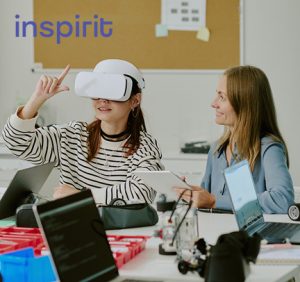
Bridging the Gap to Successful Project-Based Learning with Inspirit
There is no better way to complement your Project-Based Learning (PBL) initiatives than by creating engaging and interactive experiences in virtual reality (VR). VR provides users with a computer-generated simulation of a 3D image or environment that can be interacted with in a seemingly real and physical way. Inspirit offers user-friendly, innovative VR headsets that […]
Teq is Headed to FETC!
Teq is off to the 2026 Future of Education Technology Conference (FETC)! Being held from January 11th to January 14th, 2026, this top-notch event is being hosted at the Orange County Convention Center in Orlando, FL! Demo innovative products, grab some swag, or say hello to the team at booth #2730. Tune in to interactive […]

Introducing the New AI Literacy and Instruction Micro-credential!
The landscape of K-12 education is rapidly evolving, driven by the emergence of Artificial Intelligence. Educators and administrators need more than just introductory knowledge; they need a structured, practical path to mastery. We are excited to announce the launch of the AI Literacy and Instruction Micro-credential Playlist! This comprehensive, seven-session video series is designed specifically […]