Introducing Screencastify Submit for Student Video
Terry VanNoy
PD Specialist
News

As you work with your students in your remote classroom, video responses are a fun and unique way to help students verbalize what they know, what they’ve figured out, and what connections they’ve made. In combination with written work and projects, students can submit videos of progress and make presentations for the class.
Welcome to the world of Screencastify
Welcome to the world of Screencastify, an online screen recording software. Built originally for teachers and anyone who wanted to quickly record their screens with or without a webcam, a new product has emerged: Screencastify Submit.
As of this writing, Screencastify Submit is in the Beta version. Go to here to request early access to the product. Then, follow the instructions below to create your first video response assignment (posted in Google Classroom)!

Here is how to make your first Video Response assignment:
Step 1: Go to the Screencastify Submit webpage and sign in with your Google account. (Note: This will be the same account where your Google Classroom is. Your students will need to have already joined your Classroom to see these assignments.)
Step 2: Click “New Assignment” to start creating one. Now you have three steps to take care of:
- Details – Choose a title and type short instructions for your students.

- Settings – Decide if you want students to show something from their computer screen (a presentation or document) while using the microphone OR use the webcam and microphone to talk and explain. It is here that you can also decide if you are going to allow students to view each other’s’ video submissions.

- Get Link – In this final step you can choose to copy the link to this assignment and email or post it somewhere OR post it inside your Google Classroom (recommended).

Step 3: Once you have already sent some assignments to your students, you’ll see a list of them here:

Step 4: Here is an example of one sent to 4th grade students where they demonstrate what they know about right angles using their webcams.

Step 5: Inside Google Classroom, what students will see is this; they will have to click on the title to get to the link, read your instructions and start recording.

Step 6: If the teacher posts these Video Response assignments to Google Classroom, student work will save automatically in a newly created folder in the teacher’s Drive. This folder will be called “Screencastify Submit” and the videos will be put into a subfolder with the assignment’s name.

Step 7: Back on the Screencastify Submit web page … teachers can edit and close their assignments. Editing allows changes in the title, description and audio/video settings. If an assignment is closed, students may no longer submit videos to the teacher or to the Drive folder.

Have fun with Screencastify Submit! Share your other ideas with us! If you want to learn about other types of instructional technology for your classroom, try signing up for a trial of OTIS for educators virtual professional development.
0 thoughts on “Introducing Screencastify Submit for Student Video”
Related Articles & Other Recommended Reading
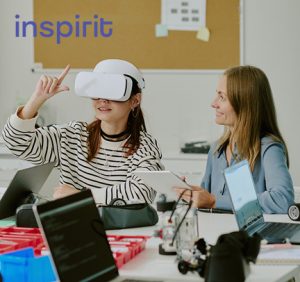
Bridging the Gap to Successful Project-Based Learning with Inspirit
There is no better way to complement your Project-Based Learning (PBL) initiatives than by creating engaging and interactive experiences in virtual reality (VR). VR provides users with a computer-generated simulation of a 3D image or environment that can be interacted with in a seemingly real and physical way. Inspirit offers user-friendly, innovative VR headsets that […]
Teq is Headed to FETC!
Teq is off to the 2026 Future of Education Technology Conference (FETC)! Being held from January 11th to January 14th, 2026, this top-notch event is being hosted at the Orange County Convention Center in Orlando, FL! Demo innovative products, grab some swag, or say hello to the team at booth #2730. Tune in to interactive […]

Introducing the New AI Literacy and Instruction Micro-credential!
The landscape of K-12 education is rapidly evolving, driven by the emergence of Artificial Intelligence. Educators and administrators need more than just introductory knowledge; they need a structured, practical path to mastery. We are excited to announce the launch of the AI Literacy and Instruction Micro-credential Playlist! This comprehensive, seven-session video series is designed specifically […]